The Myth of the Perfect Cadence
The perfect cycling cadence is not a fixed number: learn how comfort, terrain and effort shape a pedalling rhythm you can sustain and adjust.
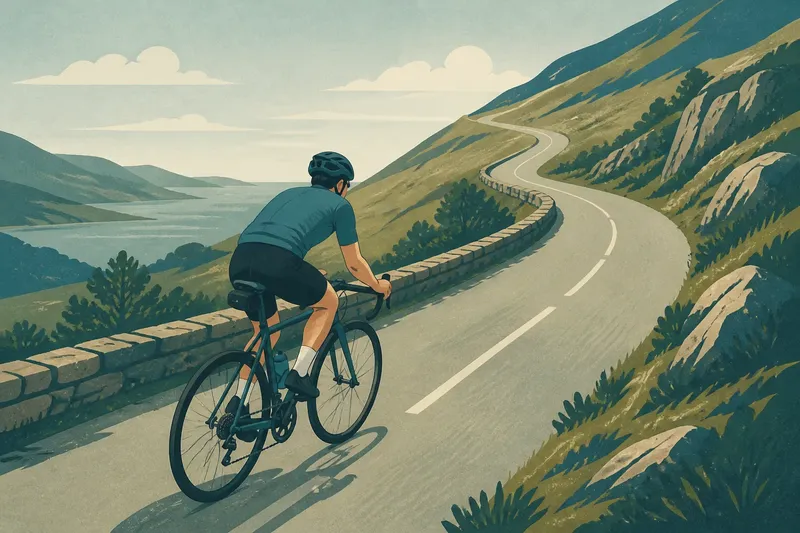
Why does a cadence that feels easy on a flat road suddenly feel awkward on a climb? The perfect cycling cadence is not a fixed number; it is a pedalling rhythm that suits your effort, terrain and comfort at that moment. If your legs feel strained or your breathing becomes ragged, the useful question is not whether you have hit a target, but what is making this rhythm hard to sustain.
What cadence tells you
Cadence is the rate at which your pedals turn, commonly counted in revolutions per minute. It describes how quickly your legs are moving, but not how much force each pedal stroke requires. A steady cadence can feel very different when you are riding gently on level ground and when you are pushing hard into a headwind.
Think of turning a hand-cranked pepper mill: turning it quickly with light pressure is a different task from turning it slowly while pressing firmly. Cycling has the same trade-off. A slower rhythm often asks for more force from each stroke; a faster one asks your legs to repeat the movement more often.
Neither end of that trade-off is automatically wrong. Your most comfortable rhythm can vary with fitness, fatigue, bike set-up, the slope ahead and how much effort you are choosing to spend. A cadence display, if your bike has one, is a way to observe your pedalling, not a mark scheme.
Heavy legs on a climb
If your legs feel as though they are grinding on an incline, the usual cause is that each pedal stroke is asking for more force than you can comfortably maintain. That can happen when the slope steepens, your speed drops or you keep pushing against resistance instead of easing the effort.
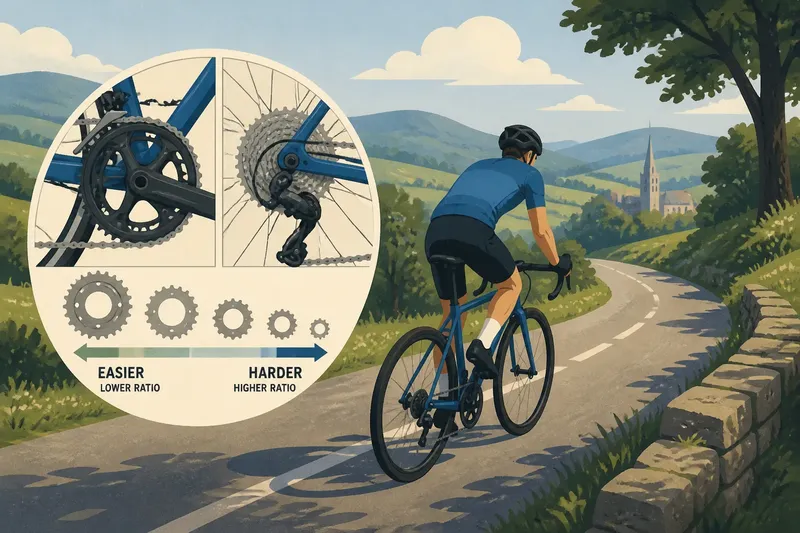
Try changing to an easier gear before your legs begin to strain, then let the pedals turn at a rhythm that feels controlled. On a long climb, it is reasonable for your cadence to be slower than on a flat stretch. Aim for an effort you can sustain, rather than forcing your legs to spin quickly simply to match a number.
If the climb is short, you may choose to push harder for a while. Notice whether your breathing and leg effort remain manageable; if they do not, ease off or take a brief recovery when the road allows. A cadence that changes as the slope changes is a normal response, not evidence that your technique has failed.
Bouncing on the saddle
At a faster pedal rhythm, some riders begin to bounce in the saddle. This may mean the legs are moving faster than they can stay smooth, or that the rider is trying to accelerate the pedals while the rest of the body remains tense. Saddle position, fatigue and the bike’s fit can also affect how stable you feel.
First, ease the effort and allow the rhythm to settle. Keep your shoulders relaxed and your grip light, and avoid trying to drive the pedals faster just because a display suggests that your cadence is low. If bouncing continues at ordinary riding efforts, try a more comfortable rhythm rather than repeatedly forcing a higher one.
Persistent discomfort, numbness or pain is a separate matter from cadence alone. Check that your saddle and riding position suit you; a qualified bike fitter can help assess persistent fit problems. Do not treat pain as something to pedal through just to maintain a particular rhythm.
Breathing gets out of step
A quick rhythm can make breathing feel hurried when the effort is already high. Conversely, pushing a large gear slowly can leave your legs working hard even if your breathing initially feels calm. The mismatch may come from the pace you are trying to hold, rather than from an incorrect cadence.
Reduce your effort until you can breathe in a way that feels controlled, then choose a rhythm that lets you keep that effort steady. On a rolling road, this may mean easing off before a rise and letting your legs turn more freely afterwards. You do not need to synchronise every breath with every pedal stroke.
Say you are riding a familiar path and reach a gentle rise while carrying a small bag. You notice that your breathing has become strained and each stroke feels heavy, so you ease the pressure, select an easier gear and let your cadence rise only as far as feels smooth. The observable result to look for is a more even effort, not a particular reading on a device.
Cadence by feel?
Should beginners use a cadence target?
A beginner can use a cadence display to notice whether the pedals are turning very slowly or very quickly, but there is no single target that suits every ride. Start with a smooth, relaxed rhythm and adjust it when your legs or breathing begin to feel uncomfortable.
Is a higher cadence always better?
No. Faster pedalling can reduce the force required for each stroke, but it also asks your legs to repeat the movement more often. If a faster rhythm feels bouncy or difficult to control, slow it until your pedalling feels smooth.
Should cadence change on hills?
It often does, because a hill changes the force needed to keep moving. Shift to a more comfortable gear and allow your rhythm to adjust instead of fighting to preserve the cadence you had on the flat.
Do I need a cadence sensor?
No. A sensor can show changes in your pedalling rhythm, which may be useful if you enjoy tracking your riding, but it is not required to find a comfortable cadence. You can also pay attention to whether your strokes feel smooth and your effort is sustainable.
Rhythm fades with fatigue
A cadence that felt natural early in a ride may become harder to hold as you tire. Fatigue can make a fast rhythm feel ragged or make a slower, forceful stroke feel increasingly demanding. Trying to preserve the same cadence throughout the ride can add pressure without solving the cause.
Ease the effort and let your rhythm settle into what you can manage now. If you are approaching a demanding section, save some energy by riding more gently beforehand rather than forcing a preferred cadence on every stretch. A short pause may be sensible if you feel unsteady or unusually exhausted.
Notice patterns across different rides without turning them into rules. You may find that a relaxed rhythm suits a long, level outing, while a shorter, harder ride feels more comfortable with a different pattern. Those observations help you make choices; they do not establish a cadence you must maintain everywhere.
What to adjust first
When pedalling starts to feel wrong, make one change at a time. That makes it easier to tell whether the discomfort came from effort, terrain, fatigue or a position issue.
- Heavy pressure on the pedals: ease the effort and select a gear that lets each stroke feel less forceful.
- Legs spinning without control: settle into a slower, smoother rhythm rather than chasing a faster reading.
- Strained breathing: reduce the overall effort, then choose a cadence that feels manageable.
- A changing slope: allow your rhythm to change with the terrain instead of holding it rigidly.
- New discomfort or persistent pain: stop treating cadence as the sole explanation and consider a bike-fit assessment or advice from a qualified professional.
Keep any cadence display in perspective. A number can help you compare how your rhythm changes between a climb and a level road, but it cannot tell you by itself whether you are comfortable, fresh or using an appropriate effort. If the display distracts you, ride by feel and check it only when convenient.
The perfect cycling cadence is the one that lets you ride smoothly at an appropriate effort for the conditions, and it may change again a few minutes later. On your next ride, notice what your legs and breathing are telling you before you alter your rhythm; that small check can help you choose an adjustment that serves the ride, not an arbitrary target.