Flat Pedals or Clipless: Two Ways to Meet the Bike
Flat pedals or clipless? Compare foot placement, shoes and stopping habits to choose a pedal system that suits your everyday rides and walking needs.
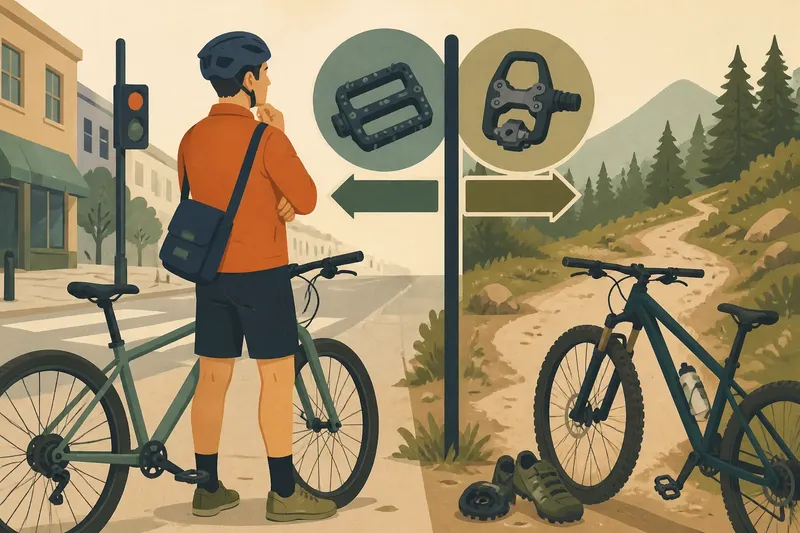
Flat pedals or clipless: which feels right when you stop at a junction, set off on a climb or walk into a shop? The answer depends on how you want your shoes to meet the bike. Each system connects foot and pedal differently, shaping comfort, convenience and the habits needed on a ride.
Two contact systems
A flat, or platform, pedal supports an ordinary shoe on a broad surface. Pins or a textured face can help the sole stay in place, while your foot remains free to lift away. You can reposition it without a release movement, which keeps the interface straightforward in stop-start riding.
Clipless pedals use a cleat fixed to a compatible cycling shoe. The cleat engages with a mechanism on the pedal; to release, the rider turns the heel as specified for that model. The name can sound backwards: these pedals are called clipless because they do not use the older toe clips and straps.
Think of a flat pedal as a doorstep and a clipless pedal as a latch. One lets you step away freely; the other holds a defined connection until you release it. Neither interface decides how good a ride will be, but each asks for a different habit.
Choose by situation
Town errands and frequent stops
Flat pedals often suit journeys with traffic lights, crossings and short walks at either end. Ordinary shoes make it simple to dismount and continue on foot, without a cleat-release action to remember while balancing. A firm sole with a grippy tread can feel more settled than very soft or smooth-soled footwear.
Clipless can work for an urban commute too, especially with recessed cleats and walking-friendly shoes. If the ride involves substantial walking or repeated unplanned stops, though, the shoe-and-cleat combination may feel less convenient than a flat platform.
Learning balance and handling
Beginners, returning riders and anyone practising slow turns may prefer flats while attention is already occupied by steering, braking and looking ahead. A foot can come off without a release movement, and the rider can experiment with foot position without first disengaging a cleat.
Clipless is also an option for a newer cyclist, but it adds a skill to learn: engaging the cleat, releasing it before a stop and choosing a suitable place to practise. Follow the pedal maker’s instructions and learn the action in a quiet, level area before relying on it in traffic or on difficult ground.
Rough paths and technical riding
On uneven trails, flats can make it easier to put a foot down when a line changes or a slow obstacle unsettles the bike. Wide platforms and suitable pins provide a contact surface, but the shoe still needs a sole that grips rather than slides across the pedal.
Clipless pedals appeal to riders who prefer their feet to stay located through bumps and changes of body position. A quick foot-down requires a practised release, so choose a system and release feel you can manage confidently. Terrain, riding style and personal comfort matter more than assuming one option is faster.
Long rides and cycling shoes
Clipless may suit someone who already wears compatible cycling shoes and likes a consistent foot position over a long outing. The cleat locates the shoe on the pedal, and a cycling shoe may feel more supportive than a very soft everyday sole. These qualities can make the connection feel composed, but comfort still depends on shoe fit and cleat position.
Flats remain a reasonable choice for long rides when the rider values freedom to move the foot, uses supportive flat-pedal shoes or simply prefers the feel. A broad pedal paired with a firm, grippy sole provides a platform without requiring specialist footwear.
Daily riding differences
Foot placement is the most immediate difference. On flats, you can shift your foot naturally, but may need to reset it if a bump or soft sole lets it wander. Clipless keeps the cleat in a repeatable position; changing that position generally means adjusting the cleat or disengaging and stepping back in.
Walking is another clear distinction. Flat pedals work with everyday shoes, while clipless shoes vary. Some road shoes have exposed cleats that can be awkward on hard floors; many touring and mountain-bike shoes recess the cleat into the tread. Check the sole and cleat arrangement if you expect to walk during your ride.
Stopping also calls for different attention. Flats make stepping off straightforward, while clipless asks you to anticipate a stop and release in time. The movement may feel routine with practice, but remains part of how you interact with the bike.
Questions about pedal choice?
Do clipless pedals make a rider faster?
They do not automatically make someone faster. A located connection may suit a rider’s technique and preferences, while an unfamiliar release or uncomfortable shoe can distract from the ride. Consider comfort and handling rather than expecting the pedal itself to improve pace.
Can I use ordinary shoes on flat pedals?
Yes. Shoes with a firm sole and tread that grips the pedal can feel more stable than smooth-soled or very flexible footwear. If your feet move around during ordinary riding, reassess the shoe and pedal combination rather than relying on pins alone.
Are clipless pedals difficult to release?
They require a deliberate heel movement, and the feel differs between models and settings. Practise engaging and releasing while stationary in a safe place, then repeat at low speed in a suitable area. Follow the pedal maker’s instructions for release adjustment.
Can I change from one system to the other?
Yes, if the bicycle’s crank and pedal fittings are compatible. Riders can keep different shoes for different journeys, but fitting or removing pedals may require suitable tools and knowledge. Ask a bicycle shop to check compatibility if you are unsure.
A worked choice
Say you ride a short commute through busy junctions, then walk across a courtyard to work. Your starting point is a pair of firm-soled everyday shoes and a route that includes frequent stops and a walk after parking. First, match the shoes to the flat pedals and check that the soles sit securely on the platform; then consider how easily you can put a foot down and walk away. The likely choice is flats for this routine. If you later add longer rides in compatible cycling shoes, clipless can remain an option for those outings rather than replacing the pedals used for commuting.
Before deciding, consider the shoes you own, how often you stop, whether you walk after parking and how comfortable you feel practising a new release movement. Treat the pedal and shoe as a pair: a broad platform cannot make a slippery sole secure, and a compatible cleat cannot make an ill-fitting shoe comfortable.
For a first purchase, choose the interface that best fits the rides you actually take. Flat pedals suit routines where flexibility and easy foot-downs matter; clipless suits riders who value a located connection and are willing to learn its release habit. If your needs differ between commutes and longer outings, keeping separate setups may be more useful than looking for one system to suit every ride.